
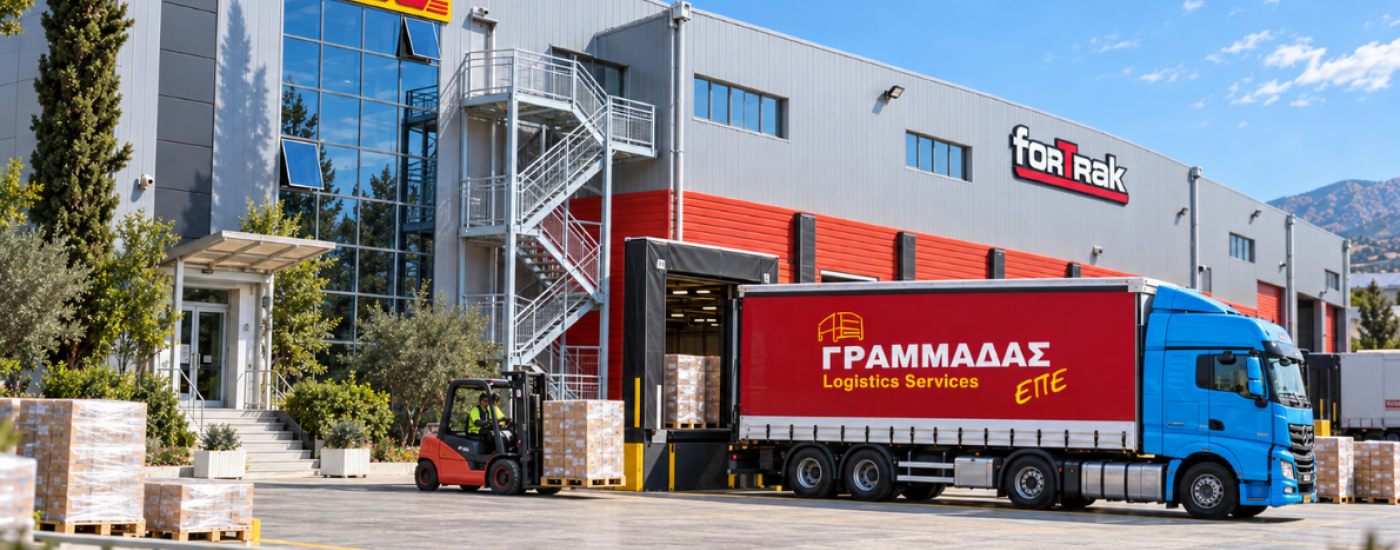


In both domestic and international road freight transport, the terms FTL (Full Truckload), LTL (Less Than Truckload) and Groupage describe different approaches to organizing freight shipments.
The most suitable option depends on several factors, including the volume and nature of the cargo, the available loading space, delivery requirements, handling needs and the possibility of combining shipments.
Understanding these differences is essential for businesses seeking to transport their goods efficiently while maintaining high standards of cargo safety and operational reliability.
Groupage Transport
Groupage involves consolidating multiple smaller shipments, often from different shippers and destined for different recipients, into a shared transport network.
Typically, these shipments are collected and transported to a logistics hub, where goods are unloaded, sorted and organized according to their final destinations. They are then forwarded through the network for delivery to their respective recipients.
This approach enables businesses to transport smaller quantities of goods without requiring a dedicated truck.
However, the consolidation and distribution process can involve several handling stages, making proper packaging and clear cargo labeling particularly important.
Appropriate packaging helps minimize the risk of handling-related damage during loading, unloading, sorting and onward transportation.
For this reason, selecting the right logistics partner is essential.
An experienced transport provider should be able to advise customers on suitable packaging methods, appropriate labeling and the handling requirements of each shipment, while applying consistent operational standards throughout the transport process.
For businesses that prioritize cargo protection and reliable delivery, Groupage requires careful coordination and attention to detail at every stage.
LTL - Less Than Truckload
LTL stands for Less Than Truckload and refers to freight shipments that do not require the full capacity of a truck.
Depending on the transport network and the characteristics of the shipment, LTL freight may share vehicle space with other consignments. It may be transported through a consolidation network or arranged as a more direct partial-load movement.
For certain shipments, a more direct transport arrangement can reduce intermediate handling, simplify scheduling and provide greater control over the delivery process.
This can be particularly valuable when transporting goods that require specific handling conditions or when delivery timing is an important consideration.
Nevertheless, LTL transport also requires careful planning and appropriate cargo protection.
Among the key factors to consider are:
- Proper cargo securing using suitable restraint equipment.
- Packaging appropriate to the weight, dimensions and characteristics of the goods.
- Vehicle specifications, such as a curtain-sided trailer, sliding roof or adequate loading height.
- The availability of suitable loading and unloading equipment.
- Route planning and realistic delivery scheduling.
Choosing an experienced logistics partner is therefore essential.
The transport provider should be able to assess the specific requirements of the shipment, recommend appropriate equipment and securing methods, and organize transportation with the aim of minimizing handling risks and unexpected delays.
FTL - Full Truckload
FTL stands for Full Truckload and refers to a transport arrangement in which an entire truck or trailer is dedicated to a single customer's shipment.
It is often the preferred solution for larger loads, time-sensitive deliveries or goods that require specific transport conditions.
One of the main advantages of FTL is the greater flexibility it can provide in planning the shipment.
Depending on the transport requirements, FTL may offer:
- More direct transportation between loading and delivery locations.
- Greater flexibility in organizing collection and delivery schedules.
- Reduced handling and fewer transfers between vehicles.
- Separation of the customer's goods from other shipments.
- The option of sealing the trailer when appropriate.
- Cargo securing arrangements tailored to the characteristics of the load.
Importantly, FTL can also be the right choice even when the available truck capacity is not completely utilized.
This is particularly relevant when transporting machinery, oversized or heavy objects, high-value goods or shipments requiring dedicated handling.
However, FTL transportation also requires careful operational planning.
Factors such as drivers' working hours, seasonal truck traffic restrictions, public holiday regulations and local access limitations can affect route planning and delivery schedules.
An experienced transport partner must consider these conditions in advance and advise the customer on the most appropriate loading and transport arrangements.
For certain shipments, additional precautions may be necessary, including specialized cargo securing or trailer sealing to support shipment integrity.
The objective is not simply to allocate an entire truck, but to determine whether a dedicated vehicle offers the most appropriate balance of cargo protection, operational control and transport efficiency.
Choosing the Right Freight Transport Solution
There is no single transport method that is ideal for every shipment.
Groupage, LTL and FTL each offer different advantages, depending on the customer's operational requirements.
Groupage can be an effective solution for smaller shipments that can be consolidated within a wider distribution network.
LTL provides flexibility for loads that do not require an entire truck, with the transport arrangement determined by the shipment's requirements and the available network.
FTL offers dedicated vehicle capacity and can be particularly suitable for larger, specialized or time-sensitive shipments.
The right decision should always take into account the characteristics of the goods, transport costs, handling requirements, delivery schedules and cargo safety.
The Grammadas Approach
At Grammadas, freight transport has been at the heart of our business for three generations.
The experience we have gained through countless successful shipments, as well as the challenges we have encountered and managed along the way, has helped us develop a deep understanding of the different requirements involved in road freight transport.
Our role goes beyond simply moving goods from one location to another.
We aim to help our customers select the most appropriate transport solution, identify potential risks and make informed decisions about loading methods, cargo protection and shipment organization.
Whether the requirement involves Groupage, LTL or FTL, our approach is based on understanding the individual characteristics of each shipment and providing practical guidance throughout the transport process.
This is the role we seek to play in our customers' supply chains: not simply transporting freight, but contributing to the effective organization of their logistics operations.
Through our B2B online quotation request platform, businesses can submit the details of their transport requirements, allowing our team to evaluate the shipment and prepare an appropriate quotation.
Request a Quote and let us help you organize your freight transport according to the needs of your business.


